
Cerebellar hypoplasia (CH) in Fetus
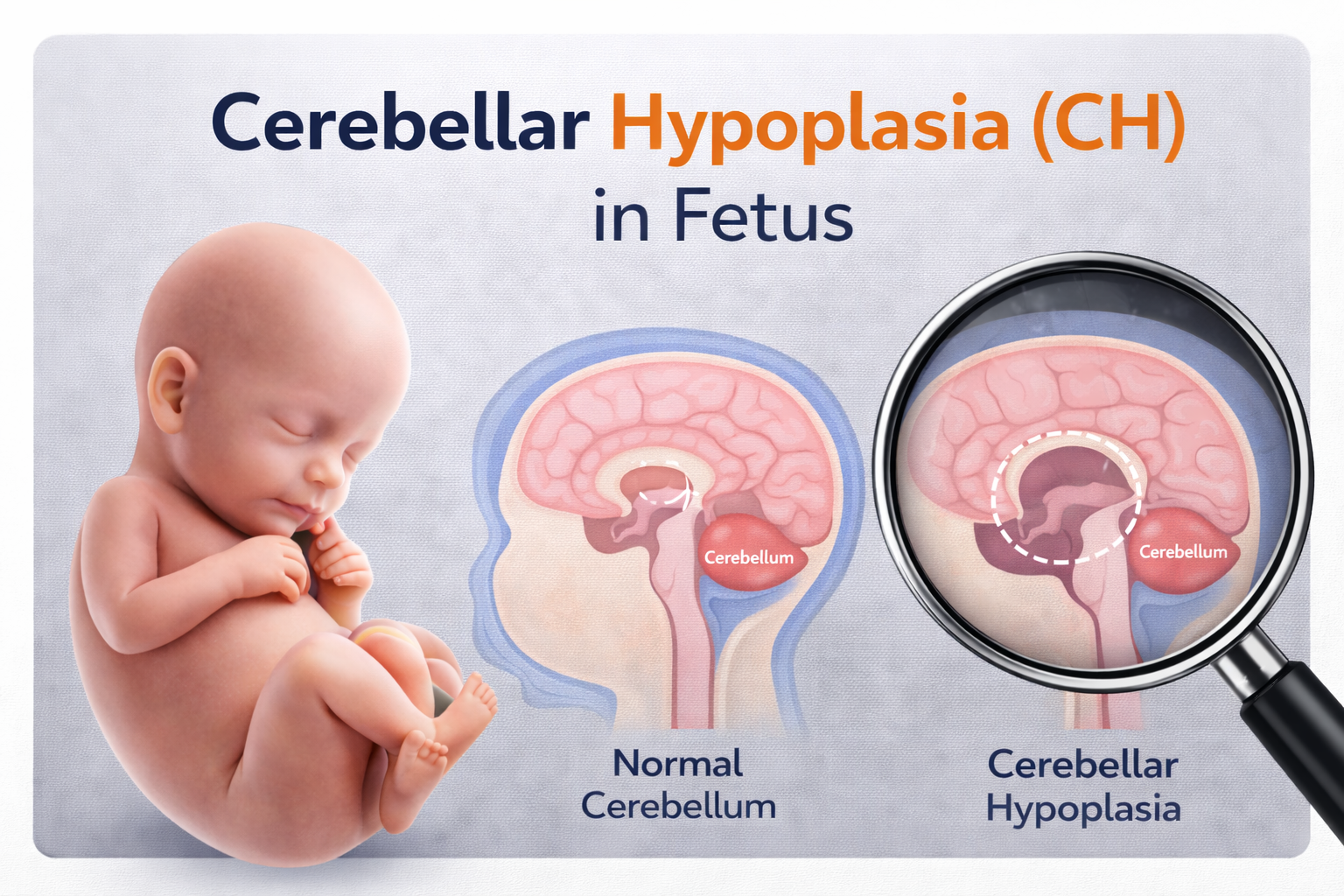
What is Cerebellar Hypoplasia?
The cerebellum is a small but very important part of the brain. It sits at the back of the head and helps the body stay balanced, move smoothly, and coordinate actions like walking, sitting, and picking things up. It also helps with some thinking and learning skills.
CH means this part of the brain is smaller than expected for the baby’s age in pregnancy. This does not always mean that the cerebellum is missing; rather, it has not grown as much as usual.
CH can affect one side, the vermis, or the whole cerebellum. It may occur on its own (isolated CH) or along with other abnormalities, in which case it may be part of a more severe medical condition.
Why does CH happen?
There are two main reasons why a baby may have CH: genetic causes and acquired causes.
1. Genetic causes
Genetic causes mean that something in the baby’s chromosomes or genes affects how the cerebellum develops. Examples include:
• A whole extra chromosome
• A missing or extra piece of a chromosome
• A change in a specific gene
These changes may happen by chance or may come from one or both parents. Not all genetic changes cause problems, but some can affect brain growth.
2. Acquired causes
These are events during pregnancy that interfere with normal brain development. They may include:
• Bleeding in the cerebellum
• Certain viral infections
• Severe fetal anaemia
These events can damage the tissue that forms the cerebellum or stop it from developing normally. In many cases, the exact cause becomes clear only after further tests.
What Tests Might Be Required?
If the cerebellum appears smaller on a routine pregnancy scan, further tests are recommended to understand how much of the brain is affected and to identify possible causes.
- Detailed Brain & Heart USG scan: Looks closely at the baby’s brain & heart
- Amniocentesis: Checks chromosomes and specific gene changes
- Blood tests: Screen for infections or clotting problems
- Fetal MRI: Provides very clear brain images, especially later in pregnancy
Types of Genetic Testing
- Karyotype analysis: Detects large chromosomal abnormalities
- FISH: A limited test but provides quick results
- Chromosomal microarray (CMA): Detects smaller chromosomal changes not seen on karyotype
- Whole exome sequencing (WES): Helps identify a genetic cause when karyotype and CMA are normal
The choice of test is made after considering all risk factors and clinical findings.
How is the fetus monitored?
You will usually be offered follow-up ultrasound scans to check whether the ventricles:
• Stay the same size
• Become smaller
• Increase in size
Many parents find this ongoing monitoring helpful and reassuring.
What Does This Mean for Baby After Birth?
The outlook varies depending on how much of the cerebellum is affected and whether other abnormalities are present.
If CH is isolated Children may have:
• Movement and balance problems (ataxia)
• Low muscle strength
• Developmental delays
• Possible speech or eye-movement difficulties
If the condition is non-progressive, many children improve with therapy, and early support can make a significant difference.
If other abnormalities are present
The outcome may be more serious and depends on which organs or brain areas are affected. Your healthcare team will explain this based on your baby’s results.
Will this happen again in future pregnancies?
If CH was caused by infection, bleeding, or anaemia, the chance of it happening again is usually very low.
Because many cases may have a genetic cause, it is helpful to speak with a genetic counsellor before planning another pregnancy.
If a genetic cause is identified:
- The risk may be low or high depending on the condition
- Extra whole chromosomes usually do not repeat
- Missing or extra pieces of chromosomes may be inherited
- Single-gene mutations may carry a 25–50% recurrence risk, depending on inheritance
- Choroid Plexus Cyst
- Who is at Risk?
- Down Syndrome
- Thickened Nuchal Fold in Fetus
- Absent or Small Nasal Bone
- Echogenic intracardiac focus (EIF) in the fetal heart
- Cerebellar hypoplasia (CH) in Fetus
- Agenesis of Septum Pellucidum in Fetal Brain
- Ventriculomegaly in the Fetal Brain
- Mega Cisterna Magna – MCM
Committed to precise diagnostics, empathetic guidance, and advanced fetal care — supporting mothers and babies at every step of their journey.
Quick Links
Contact Information